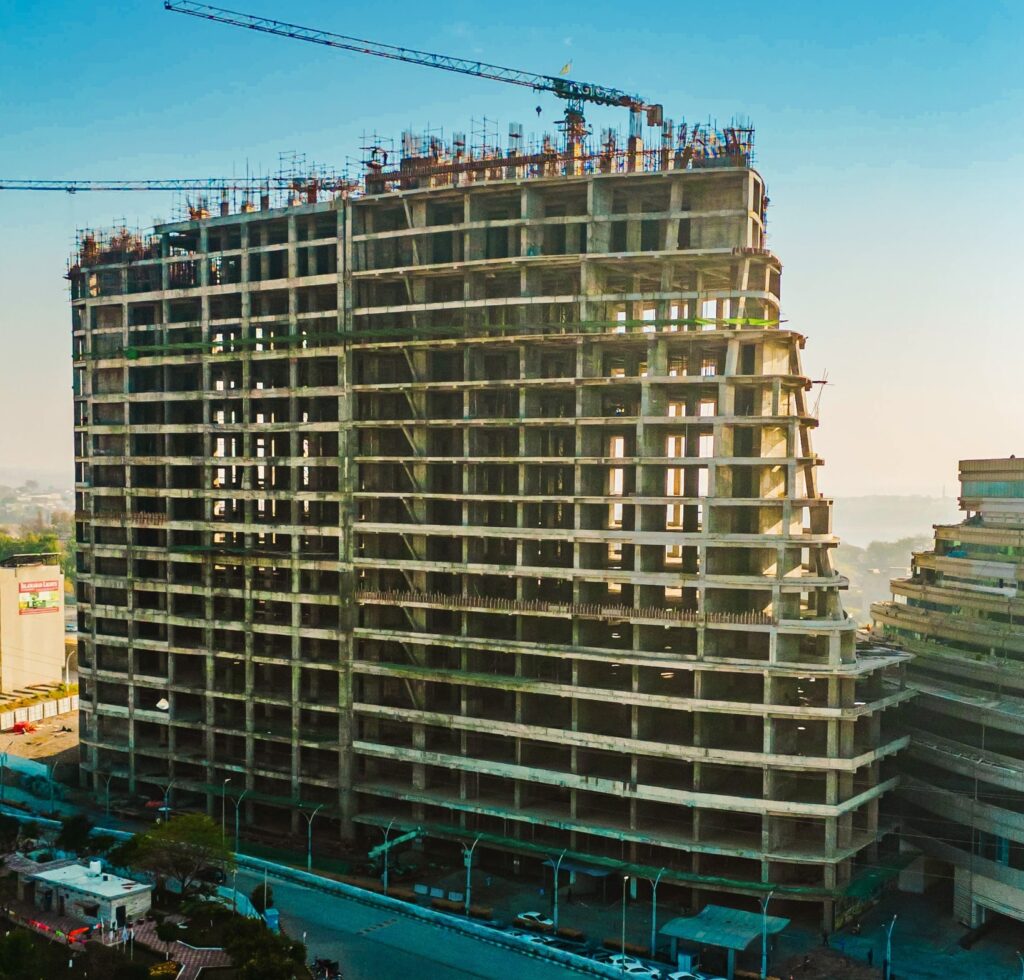

Plot vs house — which one is the better property investment in Pakistan?
This is one of the most common questions asked by property investors, overseas Pakistanis, and first-time buyers. Some investors prefer plots because land can appreciate over the long term without the maintenance costs associated with a building. Others prefer houses because a completed property can generate rental income while also benefiting from future capital appreciation.
The reality is more nuanced: there is no single answer that applies to every investor. The better choice depends on your investment objective, budget, location, holding period, need for rental income, risk tolerance, and whether you are prepared to manage construction or property maintenance.
Pakistan’s property market also varies significantly from city to city and even from one housing society to another. Recent Zameen Index data illustrates this variation. For example, its July 2026 data shows that average residential plot prices in Islamabad were around PKR 3.93 crore, while average house prices were around PKR 8.54 crore. In Lahore, the corresponding averages were about PKR 2.63 crore for residential plots and PKR 2.57 lakh on the house index page shown for July 2026, illustrating why property-index figures must be checked carefully for the relevant property size and unit before making an investment decision.
So, should you buy a plot or a house in Pakistan in 2026?
Let’s examine the question in detail.
Plot vs House: The Basic Difference
Before comparing returns, it is important to understand what you are actually buying.
A plot is primarily a land investment. You purchase the land and either hold it for future appreciation or eventually construct a property on it.
A house combines two components:
- The underlying land
- The building constructed on that land
This distinction is important because land and buildings behave differently over time.
Land in a desirable location can benefit from population growth, infrastructure development, improved accessibility, scarcity and increasing demand. A building, meanwhile, requires maintenance and can become outdated as construction quality, design, fixtures and buyer preferences change.
This is why long-term property investors often distinguish between land appreciation and building appreciation.
Zameen’s property-investment guidance similarly notes that land generally has stronger long-term resale characteristics, while buildings can experience depreciation because of age, wear and changing construction preferences.
Plot vs House: Quick Comparison
| Factor | Plot | House |
|---|---|---|
| Initial investment | Generally lower for comparable plot size | Usually higher |
| Rental income | Usually none | Yes |
| Maintenance | Very low | Regular maintenance required |
| Construction risk | Applies if you build later | Already built |
| Capital appreciation | Strongly dependent on location/development | Depends on land + building |
| Rental cash flow | No | Yes |
| Liquidity | Often relatively straightforward | Depends heavily on condition and price |
| Flexibility | High — build later or sell | Limited by existing construction |
| Long-term holding | Often suitable | Suitable if location and construction remain desirable |
| Inflation protection | Land can provide an inflation-sensitive asset | Land component plus building |
| Management requirements | Low | Higher |
| Construction-cost exposure | Delayed if you only hold the plot | Already incorporated into purchase price |
| Best suited for | Capital growth/land banking | Income + capital preservation/appreciation |
The table should not be interpreted as a guarantee of returns. Location, legal status, development quality, demand and purchase price can matter more than whether the asset is technically a plot or a house.
1. Investment Objective: Capital Appreciation vs Rental Income
The first question an investor should ask is:
What do I want my property investment to do?
There are two major objectives.
Objective A: Capital Appreciation
If your primary objective is to buy an asset today and sell it for a higher price several years later, a plot can be attractive.
A plot does not require you to maintain a building while you wait for the surrounding area to develop.
For example, a plot in a developing housing society may benefit from:
- New roads
- Commercial development
- Schools and hospitals
- Improved public transport
- New residential construction
- Increased occupancy
- Better utilities
- Greater market recognition
As development progresses, demand for land may increase.
However, this only works when the underlying development thesis is sound. A plot in a poorly planned, legally uncertain or slow-moving project should not be treated as automatically superior simply because it is land.
2. Rental Income: The Biggest Advantage of a House
One of the most important differences between a plot and a house is cash flow.
A vacant residential plot normally does not generate regular rental income.
A house, on the other hand, can potentially generate monthly rent immediately after acquisition and occupancy.
For an investor who wants regular cash flow, this can significantly change the investment equation.
For example, suppose an investor purchases a house for:
PKR 4 crore
and rents it for:
PKR 120,000 per month
Annual gross rent would be:
PKR 1.44 million
The simple gross rental yield would be:
1.44 million ÷ 40 million × 100 = 3.6%
This is only an illustration. Actual rental yields vary substantially by city, neighbourhood, property size, condition, tenant demand and purchase price.
Rental yield should also be calculated after considering:
- Vacancy periods
- Repairs
- Property management
- Property taxes
- Utilities paid by owner
- Renovation
- Security
- Brokerage
- Legal and transaction expenses
Zameen’s rental-investment guidance identifies houses and other residential properties as common rental-income assets and notes that location and tenant demand are important determinants of rental performance.
3. A Plot Has No Monthly Cash Flow — But That Can Be an Advantage
At first glance, the lack of rental income appears to be a disadvantage.
But there is another side to the equation.
A vacant plot generally has:
- No tenant management
- No plumbing repairs
- No electrical repairs
- No repainting
- No bathroom renovation
- No kitchen replacement
- No air-conditioning maintenance
- No rental vacancy management
Therefore, a plot can be considerably easier to hold.
Zameen’s comparison of land and houses highlights this difference: vacant land generally requires considerably less ongoing maintenance than a built property.
For an investor who wants a low-management asset, this can be important.
4. Construction Cost Is a Major Consideration
One of the biggest mistakes investors make when comparing a plot with a house is looking only at the purchase price.
Suppose:
Option A
You purchase a plot for:
PKR 2 crore
You eventually want to build a house.
Your total investment is therefore:
Plot + construction + approvals + utilities + boundary wall + landscaping + finishing + contingencies
The final investment can become substantially higher than the original plot price.
Option B
You purchase a completed house for:
PKR 4 crore
You already know the approximate total acquisition cost.
Therefore, a plot should not be evaluated solely on its purchase price.
You should calculate:
Total Future Investment = Plot Price + Construction Cost + Associated Development Costs
This is particularly important in periods when construction materials, labour and financing costs are elevated.
5. A House Can Save You From Construction Risk
Building a house is not simply a financial transaction.
It involves:
- Architectural design
- Approval processes
- Contractor selection
- Material procurement
- Labour management
- Project supervision
- Cost control
- Quality control
- Construction delays
- Finishing decisions
A buyer who purchases a completed house avoids many of these responsibilities.
However, buying a ready house introduces a different risk: you inherit the existing construction.
That means the buyer should inspect:
- Structure
- Roof
- Dampness
- Plumbing
- Electrical wiring
- Water supply
- Sewerage
- Kitchen
- Bathrooms
- Flooring
- Windows
- Doors
- HVAC systems
- Generator/solar systems
- Renovation history
A cheaper house with poor construction may ultimately cost more than a properly constructed property.
6. Land Appreciation vs Building Depreciation
This is perhaps the most important conceptual difference.
A house contains both land value and building value.
Over time:
Land may appreciate.
But:
The building ages.
An older house can become less attractive because of:
- Outdated architecture
- Old bathrooms
- Old kitchens
- Worn flooring
- Plumbing problems
- Electrical problems
- Structural deterioration
- Changing lifestyle requirements
This does not mean houses necessarily lose value.
In a highly desirable location, the land component may increase enough to offset or exceed depreciation in the structure.
That is why an older house in a prime location can sometimes be worth considerably more than a newer house in a weak location.
Location can matter more than age.
7. Location Can Matter More Than Plot vs House
A common investment mistake is asking:
“Should I buy a plot or a house?”
before asking:
“Where should I buy?”
Consider two hypothetical investments.
Property A
A plot in an established, highly demanded location.
Property B
A brand-new house in a remote area with weak rental demand.
The house may be newer, but that does not automatically make it the stronger investment.
Similarly, a plot in an undeveloped or legally uncertain project is not automatically better than a well-located rental house.
When evaluating property, consider:
- Location
- Accessibility
- Development status
- Legal status
- Possession
- Utilities
- Security
- Nearby commercial areas
- Schools
- Hospitals
- Employment centres
- Road connectivity
- Population growth
- Rental demand
- Resale demand
- Future infrastructure
Zameen’s guidance on plot valuation also identifies location, accessibility, amenities, security, transportation, development and demand/supply as important factors influencing land value.
8. What Does the 2026 Market Tell Us?
Current market data shows that property performance is not uniform across Pakistan.
For example, Zameen’s July 2026 residential-plot index reported:
Islamabad
Average residential plot price:
PKR 3.93 crore
The index showed a:
- 7% increase over six months
- 13% increase over one year
- 9% increase over two years
For houses in Islamabad, Zameen reported an average price of approximately:
PKR 8.54 crore
with the index showing approximately:
- 0.7% change over six months
- 4% over one year
- 6% over two years
These figures are city-level averages and should not be interpreted as the expected return for every plot or house.
9. Lahore Shows Why Property Size and Location Matter
Zameen’s July 2026 index reported the average residential plot price in Lahore at approximately:
PKR 2.63 crore
with:
- 6% six-month change
- 16% one-year change
- 12% two-year change.
But individual property sizes can behave differently.
For example, Zameen’s July 2026 index for a 10-Marla residential plot in Lahore showed an average price of approximately:
PKR 1.44 crore
with a 15% year-on-year increase.
Its 10-Marla house index showed an average price of approximately:
PKR 4.21 crore
with a 6% year-on-year increase.
This illustrates an important point:
Never compare a city-wide plot average with a house average and assume that the difference represents investment performance.
Property size, location, construction quality and the composition of the underlying dataset all affect the comparison.
10. Karachi Also Shows Strong Variation
Zameen’s July 2026 data put the average residential plot price in Karachi at approximately:
PKR 3.82 crore
with a reported:
- 20% six-month increase
- 28% one-year increase
- 74% two-year increase.
For 10-Marla plots in Karachi, the July 2026 average was approximately:
PKR 1.97 crore
with a reported 27% one-year increase.
Meanwhile, Zameen’s 10-Marla house index showed an average of approximately:
PKR 4.96 crore
and a 10% one-year increase.
Again, these numbers demonstrate that property type alone does not determine investment performance.
The specific location and property segment matter enormously.
11. The Impact of Interest Rates
Property investors should also consider the broader financial environment.
As of the State Bank of Pakistan’s 14 September 2026 monetary policy meeting, the policy rate was maintained at:
11.5%
The SBP reported the policy rate at 11.5% per annum.
Higher financing costs can influence property demand because buyers using financing may have less purchasing power.
This is especially relevant when comparing:
- A plot purchased with cash
- A house purchased with financing
- A plot purchased now and constructed later
- A rental property financed through debt
The investor should therefore calculate the cost of capital, not just the expected property appreciation.
12. Property Taxes and Transaction Costs Matter
Another factor often ignored by investors is taxation.
Pakistan’s property taxation framework changed significantly in 2026.
The Finance Act 2026 removed Section 7E’s deemed-income tax on immovable property. FBR’s 2026 budget documentation also records reductions in advance tax rates for property transactions.
For Tax Year 2027, the operative framework provides a flat 2.75% advance tax under Section 236C for ATL sellers and 1.25% under Section 236K for ATL buyers, according to the enacted 2026 framework and current rate references. Non-ATL rates remain substantially higher and are value-dependent.
The practical lesson is simple:
Do not calculate your property return using only the purchase price and selling price.
Your real return should consider:
Purchase Price + Taxes + Transfer Costs + Renovation/Construction + Holding Costs + Selling Costs
The exact tax treatment can vary according to the taxpayer, acquisition date, property type, location and applicable provincial or local charges. Investors should verify the current position with FBR and a qualified tax professional before completing a transaction.
13. Capital Gains Tax Is Also Important
Another major tax consideration is capital gains tax.
FBR explains that the Finance Act 2024 removed the previous holding-period approach for properties acquired on or after 1 July 2024, with gains on those properties subject to the applicable capital-gains framework rather than the old system in which the rate declined to zero after a specified holding period.
This is particularly relevant for investors who previously assumed:
“If I hold a plot for six years, the capital-gains tax will automatically become zero.”
That assumption should not be applied to properties acquired on or after 1 July 2024 without checking the current law.
Tax rules can materially affect your net return, so tax planning should be part of the investment calculation from the beginning.
14. Plot Investment: Major Advantages
A plot can offer several advantages.
1. Lower maintenance
There is no building to repair or renovate.
2. Flexibility
You can:
- Hold it
- Sell it
- Build later
- Build for personal use
- Build for rental
- Build according to future requirements
3. Lower management burden
There are no tenants while the plot remains vacant.
4. Potential land appreciation
If the location develops successfully, land values can increase substantially.
5. Easier long-term holding
A plot can often be held for years without the physical deterioration associated with an occupied building.
6. Ability to time construction
You can wait until your finances and circumstances are suitable for construction.
15. Plot Investment: Major Disadvantages
Plots also have important disadvantages.
No rental income
Your capital may remain completely unproductive from a cash-flow perspective.
Development risk
A promised development may take longer than expected.
Legal risk
Investors must verify:
- Ownership
- Title
- NOC
- Development authority approval
- Possession
- Transferability
- Outstanding dues
- Encumbrances
- Litigation
Speculation risk
Some investors buy based on rumours of future roads, commercial zones or infrastructure projects.
Expected development is not the same as completed development.
Construction cost risk
If you eventually build, construction costs may be considerably higher than when you purchased the plot.
16. House Investment: Major Advantages
A house offers a different investment profile.
1. Rental income
A house can generate monthly cash flow.
2. Immediate usability
You can:
- Live in it
- Rent it
- Use it as a second residence
- Offer it to family
- Potentially use part of it for other purposes where legally permitted
3. Land + structure
You own both the land and the building.
4. Potential dual return
Your total return can potentially come from:
Capital appreciation + rental income
5. Protection against construction delays
You are purchasing an already completed asset.
17. House Investment: Major Disadvantages
Maintenance
A house requires regular maintenance.
Depreciation
The structure becomes older.
Renovation
To remain competitive, a house may eventually need:
- Painting
- Kitchen renovation
- Bathroom renovation
- Flooring
- Electrical upgrades
- Plumbing repairs
Tenant risk
If rented, you may experience:
- Vacancy
- Late payments
- Property damage
- Tenant turnover
- Management expenses
Higher initial investment
A ready house generally requires more capital than simply buying the land beneath it.
18. Which Is Better for a 3–5 Year Investor?
A 3–5 year investor should focus heavily on entry price, location, liquidity and expected development.
A plot can work well when:
- Development is progressing
- Possession is available or approaching
- Infrastructure is improving
- Demand is growing
- The purchase price is reasonable
- The investor can wait for appreciation
A house can work when:
- Rental demand is strong
- The purchase price is attractive
- The property is in a mature location
- The house is in good condition
- The rental yield supports the investment
The shorter the holding period, the more important transaction costs become.
19. Which Is Better for a 7–10 Year Investor?
A longer holding period can make land particularly interesting because development cycles often take years.
A plot investor may benefit from:
Land acquisition → infrastructure development → population growth → commercial activity → increased demand → resale
But patience is essential.
A plot should not be purchased merely because someone says:
“This area will double in two years.”
A serious investor should ask:
- What infrastructure is actually approved?
- What has already been completed?
- Is possession available?
- What is the current occupancy?
- What are comparable properties selling for?
- How many owners are trying to sell?
- What is the actual end-user demand?
20. What About Investors Who Need Monthly Income?
For investors who need regular cash flow, a house can provide an important benefit that a vacant plot cannot:
Rental income.
The correct comparison should therefore be:
Plot
Capital appreciation only.
versus
House
Capital appreciation + rental income – maintenance – vacancy – taxes – management costs.
This is a much more meaningful comparison than simply comparing purchase prices.
21. What About Overseas Pakistanis?
Overseas Pakistanis often have a different investment requirement.
They may prefer assets that:
- Require limited day-to-day management
- Have strong resale demand
- Are located in established communities
- Have clear documentation
- Can be monitored remotely
A plot can therefore be attractive from a management perspective.
A house can also work, particularly when it is located in a strong rental market and professional property management is available.
For overseas investors, documentation and remote management may be just as important as projected appreciation.
FBR also provides specific rules concerning certain overseas Pakistanis and property transaction taxes, subject to eligibility conditions such as NICOP/POC status and non-resident status.
22. A Simple Way to Compare the Two Investments
Instead of asking:
“Which is better?”
calculate the total expected return.
Plot Investment
Total Return = Selling Price – Purchase Price – Taxes – Holding Costs – Selling Costs
House Investment
Total Return = Selling Price – Purchase Price + Net Rental Income – Maintenance – Taxes – Holding Costs – Selling Costs
This calculation can reveal something important.
A plot might appreciate more, but a house may produce rental income for several years.
Conversely, a house might produce rent but experience higher maintenance and slower capital appreciation.
Therefore, the investor should compare net total return, not only price appreciation.
23. Example: Hypothetical 5-Year Comparison
Consider two hypothetical investments.
Option A — Plot
Purchase:
PKR 2 crore
After five years:
PKR 3 crore
Capital gain:
PKR 1 crore
But there is no rental income.
Option B — House
Purchase:
PKR 4 crore
Average annual net rental income:
PKR 1.2 million
Five-year net rental income:
PKR 6 million
Selling price after five years:
PKR 4.8 crore
Capital gain:
PKR 80 lakh
Total gross benefit before applicable taxes and transaction/holding costs:
PKR 1.40 crore
This is an illustrative example only — not a forecast.
The purpose is to demonstrate why rental income must be included when comparing a house with a plot.
24. The Most Important Question: What Is Your Investment Goal?
Use the following framework.
If your goal is long-term capital appreciation:
Consider:
Plot
especially where the development story, legal position and future demand are well supported.
If your goal is monthly rental income:
Consider:
House
in a location with strong tenant demand.
If you want minimum maintenance:
Consider:
Plot
If you want immediate occupancy:
Consider:
House
If you want to construct your own home later:
Consider:
Plot
If you do not want construction management:
Consider:
Ready house
If you have a long investment horizon:
A plot may fit naturally, but the specific location remains critical.
If you need regular cash flow:
A house may fit better, provided the rental economics work.
25. The Location Checklist for Plot Buyers
Before buying a plot in Pakistan, verify:
Legal
- NOC
- Ownership
- Title
- Transferability
- Development authority status
- Litigation
- Encumbrances
Development
- Possession
- Roads
- Electricity
- Gas availability where applicable
- Water
- Sewerage
- Street development
- Commercial areas
Market
- Current sale prices
- Recent transaction evidence
- Rental demand in surrounding area
- Population/occupancy
- Resale demand
- Comparable plots
Future Potential
- New roads
- Infrastructure
- Commercial development
- Nearby employment centres
- Educational institutions
- Healthcare facilities
- Transport links
26. The House-Buying Checklist
Before purchasing a house, inspect:
Structure
- Foundation
- Roof
- Walls
- Dampness
- Cracks
- Construction quality
Services
- Electrical wiring
- Plumbing
- Water pressure
- Sewerage
- Gas
- Internet availability
- Solar installation, if any
Documentation
- Ownership
- Registry/transfer documents
- Approved building plan where applicable
- Property tax status
- Utility bills
- Society dues
- Any outstanding liabilities
Investment Potential
- Current rent
- Comparable rents
- Vacancy rate
- Resale demand
- Renovation requirement
- Land value
- Age of construction
27. Common Mistakes Investors Should Avoid
Mistake 1: Buying only because someone says “prices will double”
Always verify the fundamentals.
Mistake 2: Ignoring documentation
A cheap property can become an expensive problem if the title or approval position is defective.
Mistake 3: Ignoring rental yield
A house that looks expensive may become more attractive when its rental income is properly calculated.
Mistake 4: Ignoring construction costs
A cheap plot is not necessarily a cheap completed property.
Mistake 5: Buying in an undeveloped area without a clear exit strategy
Ask who will buy your property when you want to sell.
Mistake 6: Assuming all plots appreciate
Location and development determine demand.
Mistake 7: Assuming every house depreciates
A house in a prime location can retain or increase its overall value because the underlying land becomes more valuable.
Mistake 8: Ignoring taxes and transaction expenses
Your gross capital gain is not necessarily your net investment return.
Plot vs House: The Bottom Line
So, which is a better investment in Pakistan — a plot or a house?
The answer depends on what you want from the investment.
A plot is primarily a capital-growth and land-holding strategy. It can be attractive for investors who have a longer time horizon, do not require monthly income, want minimal maintenance and are confident about the location’s development prospects.
A house is both an asset and an income-producing property. It can be attractive for investors who want rental cash flow, immediate usability and exposure to both land and the built property.
The key lesson is:
Do not choose between a plot and a house simply by asking which property type is “better.” Choose the property that best matches your investment objective, budget, time horizon, location and cash-flow requirements.
In Pakistan’s property market, location, documentation, purchase price, development, demand and exit strategy can matter more than the simple label of “plot” or “house.”
For investors, the strongest approach is to calculate the complete investment equation:
Purchase Cost + Taxes + Development/Construction + Holding Costs + Maintenance – Rental Income + Capital Appreciation – Selling Costs = Net Investment Return
That is the number that ultimately matters.