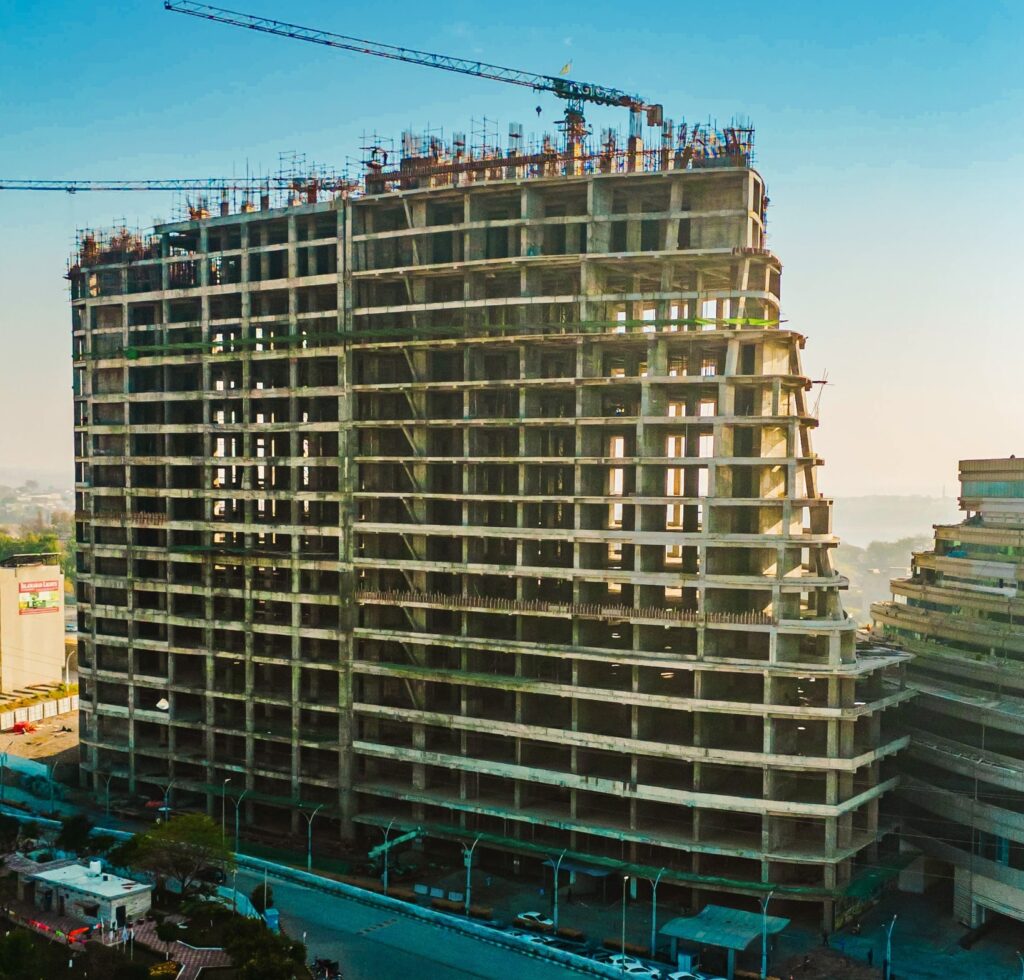

How to Build a Property Investment Portfolio in Pakistan
Building a property investment portfolio in Pakistan is not simply about buying multiple plots or houses. It is about creating a balanced collection of real estate assets that can generate rental income, provide long-term capital appreciation, preserve wealth, and reduce investment risk. How to Build a Property Investment Portfolio in Pakistan
With the right strategy, investors can gradually build a diversified property portfolio across residential, commercial, rental, and development-focused assets. However, successful property investment requires careful research, financial planning, legal verification, location analysis, and an understanding of market cycles.
In this guide, we explain how to build a property investment portfolio in Pakistan, what types of properties to consider, how to diversify your investments, how to evaluate locations, and what mistakes investors should avoid.
Disclaimer: Property prices, taxes, regulations, approvals, rental yields, and market conditions can change. Investors should independently verify current information and obtain professional legal and tax advice before making a transaction.
What Is a Property Investment Portfolio?
A property investment portfolio is a collection of real estate assets owned by an individual, family, company, or investment group.
Instead of putting all your money into one property, a portfolio approach allows you to invest in different types of properties and locations according to your financial goals.
For example, an investor could build a portfolio consisting of:
- Residential plots
- Houses
- Apartments
- Commercial shops
- Offices
- Commercial plots
- Rental properties
- Development projects
- REITs or other regulated real-estate investment vehicles
The objective is to create a portfolio where different assets serve different purposes.
One property may provide monthly rental income, while another may be purchased primarily for capital appreciation. A commercial property may provide stronger rental potential, while a plot may be held for long-term growth.
Why Build a Property Investment Portfolio in Pakistan?
Real estate remains an important component of wealth-building for many Pakistani investors. The housing sector also has significant structural demand, while major cities continue to attract residential, commercial, and investment activity. The Board of Investment highlights substantial housing demand and identifies housing as an important investment sector in Pakistan.
However, investing successfully does not mean buying property randomly.
A well-planned portfolio can help investors:
1. Diversify Risk
If all your money is invested in one property or one location, your portfolio becomes highly dependent on that asset.
Diversifying across property types and locations can reduce concentration risk.
2. Generate Rental Income
Rental properties can provide recurring cash flow.
Examples include:
- Apartments
- Houses
- Shops
- Offices
- Warehouses
- Commercial units
3. Target Capital Appreciation
Some investors focus primarily on buying property in locations with strong development potential.
Infrastructure development, accessibility, population growth, commercial activity, and increasing demand can influence long-term property values.
4. Preserve Wealth
Property is often considered a long-term asset class for wealth preservation, particularly when purchased carefully and held for an appropriate investment horizon.
5. Create Multiple Income Sources
Instead of depending on one rental property, an investor can gradually build several income-producing assets.
Step 1: Define Your Property Investment Goals
Before purchasing your first investment property, determine exactly what you want your portfolio to achieve.
Ask yourself:
- Do I want monthly rental income?
- Am I primarily interested in capital appreciation?
- Do I want short-term or long-term investments?
- Am I investing for retirement?
- Do I want to preserve family wealth?
- Do I want to build commercial income?
- How much liquidity do I need?
- What level of investment risk can I tolerate?
Your answers will determine the type of properties you should purchase.
For example:
Income-focused investor:
May prioritize apartments, offices, shops, or other rental-producing properties.
Long-term investor:
May consider plots and properties in developing locations with strong infrastructure potential.
Balanced investor:
May combine rental properties with land and commercial assets.
Step 2: Calculate Your Total Investment Budget
One of the biggest mistakes new property investors make is calculating only the purchase price.
Your actual property investment budget may also need to account for:
- Purchase price
- Transfer charges
- Taxes
- Registration costs
- Legal fees
- Brokerage or agency charges
- Renovation costs
- Construction costs
- Maintenance
- Property management
- Vacancy periods
- Financing costs
Therefore, do not invest your entire available capital in the purchase price.
Maintain an emergency and liquidity reserve.
Example
Suppose an investor has Rs. 1 crore available.
Instead of putting the entire Rs. 1 crore into one property, the investor might allocate capital across:
- Core property investment
- Income-producing asset
- Future investment reserve
- Transaction and maintenance costs
The exact allocation should depend on the investor’s income, risk tolerance, investment horizon, and financial obligations.
Step 3: Choose the Right Property Investment Strategy
There is no single strategy that works for every investor.
Some of the most common property investment strategies in Pakistan include:
A. Buy and Hold
Purchase a property and hold it for several years.
The objective is usually long-term capital appreciation, rental income, or both.
This strategy may work well for investors who do not need immediate liquidity.
B. Rental Income Strategy
Purchase properties that have strong tenant demand.
Potential rental assets include:
- Apartments
- Houses
- Shops
- Offices
- Commercial units
Before buying, calculate the expected annual rental income against the total acquisition cost.
Basic Rental Yield Formula
Gross Rental Yield = Annual Rental Income ÷ Property Purchase Price × 100
For example:
If a property costs Rs. 2 crore and generates Rs. 1.2 million annual rent:
Gross Rental Yield = Rs. 1.2 million ÷ Rs. 20 million × 100 = 6%
Remember that gross rental yield does not account for maintenance, vacancy, taxes, service charges, management costs, or other expenses.
Step 4: Diversify Across Property Types
One of the most important principles of building a property portfolio is diversification.
Instead of investing everything in one property category, consider a combination of assets.
Residential Property
Examples:
- Houses
- Apartments
- Residential plots
Residential property can provide both rental opportunities and long-term appreciation.
Commercial Property
Examples:
- Shops
- Offices
- Commercial units
- Commercial plots
Commercial property may provide attractive rental income, but location, tenant demand, accessibility, and purchase price are critical.
Land and Plots
Plots are often purchased for long-term capital appreciation.
However, investors should carefully investigate:
- Development status
- Approval status
- Infrastructure
- Possession
- Location
- Transferability
- Development timeline
- Market liquidity
REITs
Investors who want exposure to real estate without directly owning physical property can also investigate regulated real-estate investment structures such as REITs. Pakistan’s REIT framework is regulated by the Securities and Exchange Commission of Pakistan (SECP).
Step 5: Diversify Across Locations
Location is one of the most important factors in Pakistani real estate.
Depending on your investment objectives, you may consider established or emerging markets in cities such as:
- Islamabad
- Rawalpindi
- Lahore
- Karachi
- Peshawar
- Faisalabad
- Other growing urban centres
However, diversification does not mean buying property everywhere.
A better approach is to understand why a particular location may have future demand.
Look for factors such as:
- Major road connectivity
- Public transportation
- Commercial development
- Educational institutions
- Hospitals
- Employment centres
- Population growth
- Nearby established communities
- Infrastructure projects
- Accessibility to airports
- Existing rental demand
Step 6: Study the Micro-Location
Even within the same city, property performance can vary dramatically from one neighbourhood to another.
Two properties located only a few kilometres apart can have very different:
- Prices
- Rental demand
- Resale liquidity
- Development timelines
- Tenant profiles
- Capital appreciation potential
Therefore, never evaluate a property only by its city name.
Study the sector, block, street, commercial zone, access roads, surrounding development, and immediate neighbourhood.
For example, an apartment located close to employment centres, universities, shopping areas, and major roads may have stronger rental demand than a similar apartment located in an isolated development.
Step 7: Verify Legal Status Before Investing
Legal due diligence is one of the most important steps in property investment in Pakistan.
A property that appears inexpensive may carry significant legal or development risks.
Before purchasing, investigate:
- Ownership documents
- Title
- Transfer status
- Approval status
- Development authority approval
- NOC where applicable
- Mortgage or encumbrance status
- Outstanding dues
- Building approvals
- Possession status
- Land-use classification
- Development restrictions
For Islamabad-related investments, the Capital Development Authority provides an Initial Property Verification Service and specifically advises investors to examine issues such as approved areas, planning specifications, mortgage plots, building completion certification, sanctioned areas, approved units, and layout plans.
Similarly, investors considering Rawalpindi-area housing schemes should check the relevant status with the Rawalpindi Development Authority. RDA publishes information concerning approved and illegal housing societies and advises the public to avoid illegal or fake schemes.
Golden Rule:
Never invest solely because a property is cheap.
A lower price does not necessarily mean a better investment.
Step 8: Analyse Rental Demand
If your objective is rental income, do not buy a property simply because the asking price looks attractive.
First investigate the rental market.
Ask:
- How much rent do comparable properties receive?
- How long does it take to find a tenant?
- Who are the likely tenants?
- Is the location suitable for families?
- Is there demand from professionals?
- Are offices or businesses seeking space?
- What amenities are nearby?
- What is the vacancy rate?
Compare at least several similar properties before estimating rental income.
Step 9: Analyse Capital Appreciation Potential
Capital appreciation means an increase in the property’s market value over time.
However, investors should avoid assuming that every property will automatically appreciate.
Look for genuine economic and development drivers.
These may include:
Infrastructure
New roads, bridges, public transportation, utilities, and connectivity can influence property demand.
Commercial Activity
Areas with increasing businesses, retail, offices, and services can attract residents and investors.
Population Growth
Growing population and household formation can increase demand for housing.
Accessibility
Properties close to major roads and established commercial areas may have stronger liquidity.
Development Progress
For developing projects, monitor actual development rather than relying only on marketing promises.
Step 10: Build a Balanced Portfolio
A balanced property investment portfolio can contain different types of assets.
For example, a hypothetical investor could structure a portfolio around three broad categories:
| Portfolio Segment | Main Objective |
|---|---|
| Residential Property | Rental income + appreciation |
| Commercial Property | Rental income + business demand |
| Land/Plots | Long-term capital appreciation |
| Cash Reserve | Liquidity + future opportunities |
The percentages should not be treated as a universal formula.
Every investor’s allocation should depend on:
- Available capital
- Monthly income
- Existing assets
- Debt
- Investment horizon
- Risk tolerance
- Liquidity requirements
- Family obligations
Step 11: Consider Property Liquidity
A property can have a high advertised price but still be difficult to sell.
This is why liquidity matters.
Before investing, ask:
If I needed to sell this property within 30, 60, or 90 days, who would buy it?
Properties with established demand, good accessibility, proper documentation, and realistic pricing may generally be easier to exit than highly speculative assets.
Liquidity should therefore be considered alongside expected appreciation.
Step 12: Understand Property Taxes and Transaction Costs
Taxation can significantly affect your real estate returns.
Pakistan’s property taxation rules can change through annual Finance Acts and other amendments. The Federal Board of Revenue maintains current withholding-tax rate cards, including a Tax Year 2027 rate card updated under Finance Act 2026.
The 2026-27 budget also brought significant changes to property-related taxation, including changes reported for Sections 236K and 236C and the treatment of Section 7E. Investors should verify the current applicable rules before completing a transaction rather than relying on older articles or informal advice.
Always calculate:
Purchase Cost + Taxes + Transfer Costs + Renovation/Development + Holding Costs + Selling Costs
before calculating your expected return.
This gives you a much more realistic picture of profitability.
Step 13: Keep Proper Documentation
Maintain a complete record of every property investment.
Your investment file should include:
- Sale agreement
- Transfer documents
- Payment receipts
- Tax records
- Ownership documents
- NOCs
- Approval documents
- Development charges
- Utility records
- Rental agreements
- Maintenance records
- Property valuation information
Good documentation makes future sale, transfer, taxation, inheritance, and portfolio management easier.
Step 14: Reinvest Your Property Income
One of the most powerful ways to grow a property portfolio is to reinvest cash flow.
For example:
Property 1 → Rental Income → Savings → Property 2 → More Rental Income → Property 3
Over a long investment horizon, reinvesting rental income and capital gains can help investors expand their portfolio without relying entirely on fresh capital.
However, reinvestment should only occur after assessing market conditions and maintaining adequate liquidity.
Step 15: Review Your Portfolio Regularly
Building a portfolio does not end after purchasing the properties.
Review your portfolio periodically.
Track:
- Current property value
- Rental income
- Rental yield
- Vacancy
- Maintenance costs
- Taxes
- Outstanding financing
- Market demand
- Liquidity
- Development progress
- Capital appreciation
- Potential exit opportunities
A property that was an excellent investment five years ago may not necessarily remain the best use of your capital today.
Residential vs Commercial Property: Which Is Better?
There is no universal answer.
It depends on your investment objective.
| Factor | Residential | Commercial |
|---|---|---|
| Rental Demand | Often broad | Can be strong in prime locations |
| Tenant Type | Families/individuals | Businesses |
| Entry Cost | Varies | Often higher |
| Management | Usually simpler | Can be more specialised |
| Rental Potential | Location dependent | Location/business dependent |
| Capital Growth | Location dependent | Location and commercial activity dependent |
| Risk | Moderate to high depending on asset | Can be higher in weak commercial locations |
The important point is to evaluate the specific property, not just the category.
Plot vs Rental Property: Which Should You Choose?
This is one of the most common questions asked by Pakistani investors.
Plot
A plot may be suitable for investors who:
- Have a long investment horizon
- Want to target capital appreciation
- Do not require immediate rental income
- Can wait for development
Rental Property
A rental property may be more suitable for investors who:
- Want recurring income
- Prefer an operating asset
- Want to combine rent with appreciation
- Need periodic cash flow
A balanced portfolio can potentially include both.
How Much Money Do You Need to Start Property Investment in Pakistan?
There is no fixed minimum amount.
An investor can begin with whatever capital is realistically affordable, provided the investment is properly researched.
Depending on the budget, investors may explore:
- Smaller residential units
- Apartments
- Smaller plots
- Shared or fractional structures where legally appropriate
- Development projects
- Commercial units
- REITs
- Rental properties
The key principle is:
Start with a financially manageable investment rather than taking excessive debt simply to purchase a larger property.
Common Mistakes to Avoid When Building a Property Portfolio
1. Putting All Your Money Into One Property
This creates concentration risk.
2. Buying Only Because Prices Are Rising
Past appreciation does not guarantee future appreciation.
3. Ignoring Rental Yield
A property may look expensive or cheap depending on its income potential.
4. Ignoring Legal Verification
This can turn an apparently attractive investment into a major financial problem.
5. Buying in an Unapproved Project
Always verify the relevant authority and approval status.
6. Using All Available Cash
Maintain an emergency and opportunity fund.
7. Ignoring Taxes and Transaction Costs
Your actual return can be significantly different from your headline profit.
8. Following Property Dealers Blindly
Take professional advice, but conduct your own due diligence.
9. Chasing Speculative Projects
High promised returns usually come with higher uncertainty.
10. Having No Exit Strategy
Before buying, know why you are buying and under what circumstances you would sell.
A Practical Property Portfolio Example
Consider an investor with a hypothetical Rs. 5 crore investment capacity.
Instead of putting the entire amount into one expensive property, the investor could potentially consider a diversified approach involving:
Core Residential Asset
A property intended for stable demand and potential rental income.
Commercial Asset
A shop or office in a location with established business activity.
Long-Term Land Investment
A plot in a properly verified development with a longer investment horizon.
Liquidity Reserve
Cash retained for emergencies, taxes, maintenance, and future opportunities.
This approach can create exposure to different sources of return.
The exact allocation should be customised according to the investor’s financial circumstances rather than following a fixed percentage.
Islamabad and Rawalpindi Property Investment
The Islamabad-Rawalpindi region is particularly relevant for investors because it combines residential communities, commercial centres, government institutions, employment hubs, educational institutions, and expanding development corridors.
For investors considering Islamabad property, official verification is especially important. CDA provides property verification services and maintains information relating to property records and verification.
For Rawalpindi and surrounding areas, investors should verify housing-society status and approvals with the relevant authority before investing. RDA maintains information on approved and illegal housing societies.
Rather than asking simply:
“Where is property cheapest?”
investors should ask:
“Where is there sustainable demand, proper documentation, infrastructure, liquidity, and realistic long-term potential?”
How to Find Property Investment Opportunities in Pakistan
Finding the right property requires research across multiple sources.
Investors should compare:
- Current asking prices
- Recent transaction prices where available
- Rental rates
- Property size
- Location
- Development status
- Approval status
- Infrastructure
- Nearby projects
- Commercial activity
- Resale demand
Property portals and market indexes can be useful for comparing price trends, but investors should not treat online asking prices as guaranteed transaction values.
For example, current property index data provides price information and historical trends across multiple Pakistani locations, which can help investors conduct initial market comparisons.
The 7 Golden Rules of Property Investment in Pakistan
If you want to build a successful property portfolio, remember these seven principles:
1. Buy With a Strategy
Know whether your objective is income, appreciation, or both.
2. Diversify
Avoid excessive concentration in one property or location.
3. Verify Before Paying
Check ownership, approvals, documentation, and transfer status.
4. Calculate the Numbers
Consider rental yield, taxes, expenses, and total acquisition cost.
5. Focus on Demand
Strong end-user and tenant demand can support liquidity.
6. Think Long Term
Property investment generally works best when approached with patience and discipline.
7. Keep Learning
Property markets, regulations, taxes, infrastructure, and investor preferences change over time.
Final Thoughts: Build a Portfolio, Not Just a Property Collection
Building a property investment portfolio in Pakistan requires a long-term mindset.
The goal should not simply be to accumulate as many properties as possible.
The goal is to build a collection of quality, legally verified, financially sensible, and strategically diversified assets.
A successful portfolio may combine residential property, commercial real estate, rental assets, land, and other regulated real-estate investment opportunities. The right mix depends on your capital, risk tolerance, investment horizon, and financial goals.
Most importantly, do not rush into a property because of a limited-time offer, social media advertisement, or an attractive promised return.
Research the location. Verify the property. Analyse the numbers. Understand the taxes. Consider liquidity. Then invest.
For investors looking for property opportunities in Islamabad, Rawalpindi and other major Pakistani markets, platforms such as Win Propertiez can help investors discover residential and commercial property listings and compare available opportunities.
The smartest property investor is not necessarily the person who buys the most properties.
It is the investor who builds the right portfolio, manages risk, and makes every property purchase with a clear strategy.
Frequently Asked Questions About Property Investment in Pakistan
Is property a good investment in Pakistan?
Property can be a useful long-term investment for some investors, but returns are not guaranteed. Location, purchase price, documentation, rental demand, development, taxation, and market conditions all influence investment performance.
What is the best property investment in Pakistan?
There is no single best property for every investor. Residential, commercial, plots, rental properties, and other real-estate investments have different risk and return characteristics.
How can I start property investment with limited capital?
Start by defining your budget and investment objective. Depending on the available capital, investors can research smaller residential units, apartments, plots, development projects, or regulated real-estate investment structures.
Should I invest in plots or rental property?
Plots generally focus more on potential capital appreciation, while rental properties can provide recurring cash flow. A diversified portfolio can potentially include both.
How do I verify a property in Pakistan?
Verify ownership, transferability, approval status, NOC where applicable, development status, outstanding dues, and other legal documentation with the relevant authority and qualified professionals.
Is commercial property better than residential property?
Not necessarily. Commercial property can provide attractive rental opportunities in strong locations, but it may also carry higher entry costs and location-specific risks. Residential property can offer broader end-user demand.
How long should I hold a property investment?
The appropriate holding period depends on the investment strategy. Long-term investors may hold assets for several years, while income-focused investors may prioritise ongoing rental returns.
SEO Information
Primary Keyword:
Property Investment in Pakistan
Secondary Keywords:
- Property investment portfolio in Pakistan
- How to invest in property in Pakistan
- Real estate investment in Pakistan
- Best property investment in Pakistan
- Property investment strategy Pakistan
- Real estate portfolio Pakistan
- Rental property investment Pakistan
- Commercial property investment Pakistan
- Residential property investment Pakistan
- Property investment opportunities Pakistan
- How to build a real estate portfolio
- Investment property in Islamabad
- Property investment in Rawalpindi
- Property investment tips Pakistan
SEO Title:
How to Build a Property Investment Portfolio in Pakistan
Meta Description:
Learn how to build a property investment portfolio in Pakistan. Discover property investment strategies, diversification, rental income, legal verification, taxation and smart real estate investing tips.
Suggested URL Slug:/how-to-build-property-investment-portfolio-in-pakistan/
Suggested H1:
How to Build a Property Investment Portfolio in Pakistan
Suggested Featured Image Alt Text:
Property Investment Portfolio in Pakistan
Suggested Internal Links for Win Propertiez:
- Property for Sale in Pakistan
- Commercial Property for Sale
- Residential Property for Sale
- Property for Rent
- Property Investment Opportunities
- Islamabad Property
- Rawalpindi Property
- Commercial Shops for Sale
- Offices for Sale
- Property Projects in Pakistan